The witch
kaššaptu
kaššaptubāʾertu ša bāʾirāti, 'huntress of huntresses'
- witchcraft
- figurines
- the street
- the night
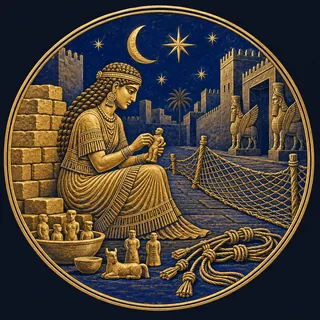
The adversary of the anti-witchcraft rituals: a human woman who 'roams the streets', makes figurines of her victim, buries them with the dead and drives away his god and goddess. Maqlû never names her ('I do not know your city, I do not know your house, I do not know your name') but heaps every hostile title on her, murderess, ecstatic, snake-charmer, Elamite, Sutean, and has her tried at night before the gods, burned in effigy by Girra and washed away at dawn. She is almost always paired with the warlock.
See The witch in the interactive atlas
First attested
7th c. BCE (Neo-Assyrian copies) · Maqlû I 4
In the texts
kaššāptu muttalliktu ša sūqāti
The witch, she who roams the streets tr. Tzvi Abusch
Maqlû III 1 Read the full text ↗
kaššāptu nērtānītu
Witch, murderess tr. Tzvi Abusch
Maqlû III 39 Read the full text ↗
bāʾertu ša bāʾirāti / kaššāptu ša kaššāpāti
Huntress of huntresses, witch of witches tr. Tzvi Abusch
Maqlû VII 80–81 Read the full text ↗
ālki ul īde bītki ul īde šumki ul īde
I do not know your city, I do not know your house, I do not know your name tr. Tzvi Abusch
Maqlû II 208 Read the full text ↗
Ties
- Enemies
- Lugalirra and MeslamtaeaMaqlû VI 149″–151″
- Ruled by
- KanisurraMaqlû V 56
The reference after a name is the passage the tie rests on.
In the myths
Passages in the library
Passages of the original-language texts that name The witch, counted by a word index.